
An HTTP 500 Internal Server Error indicates that your server encountered a problem it cannot identify. This guide explains how to interpret the error message, enable WordPress debugging to find more details, and contact your hosting provider for further help.
Error message
↑ Back to topThe HTTP 500 Internal Server Error output is intentionally generic and does not describe the underlying cause. Most hosting providers display a message similar to the following on live sites:
Internal Server Error
The server encountered an internal error or misconfiguration and was unable to complete your request.
Please contact the server administrator at [support email] and inform them of the time the error occurred, and anything you might have done that may have caused the error.
More information about this error may be available in the server error log.
[server/port information]
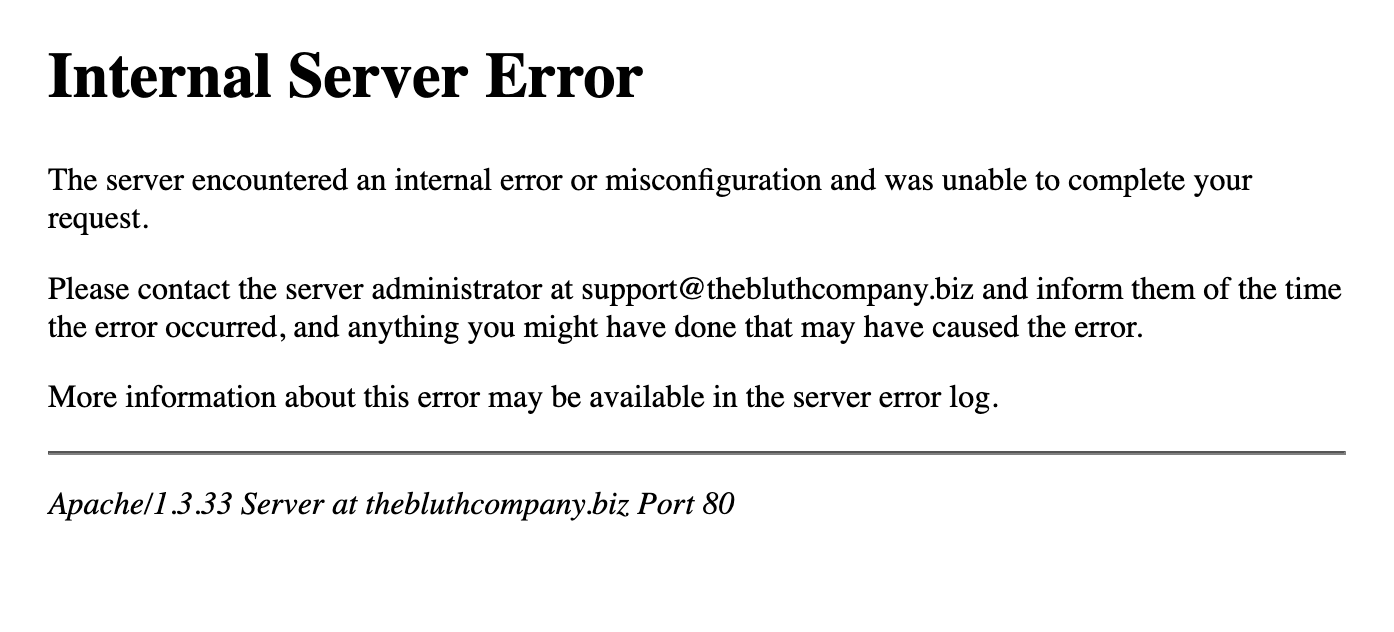
Because the message is generic, you need additional information to troubleshoot a persistent 500 error.
Enable WordPress debugging
↑ Back to topWordPress includes a built-in debugging mode that replaces the generic error with a more descriptive message. Enable it by editing your site’s wp-config.php file.
- Connect to your site using Secure File Transfer Protocol (SFTP).
- Open the file named
wp-config.php. - Find the following line of code:
define('WP_DEBUG', false); - Change the value from
falsetotrue. - Save the file.
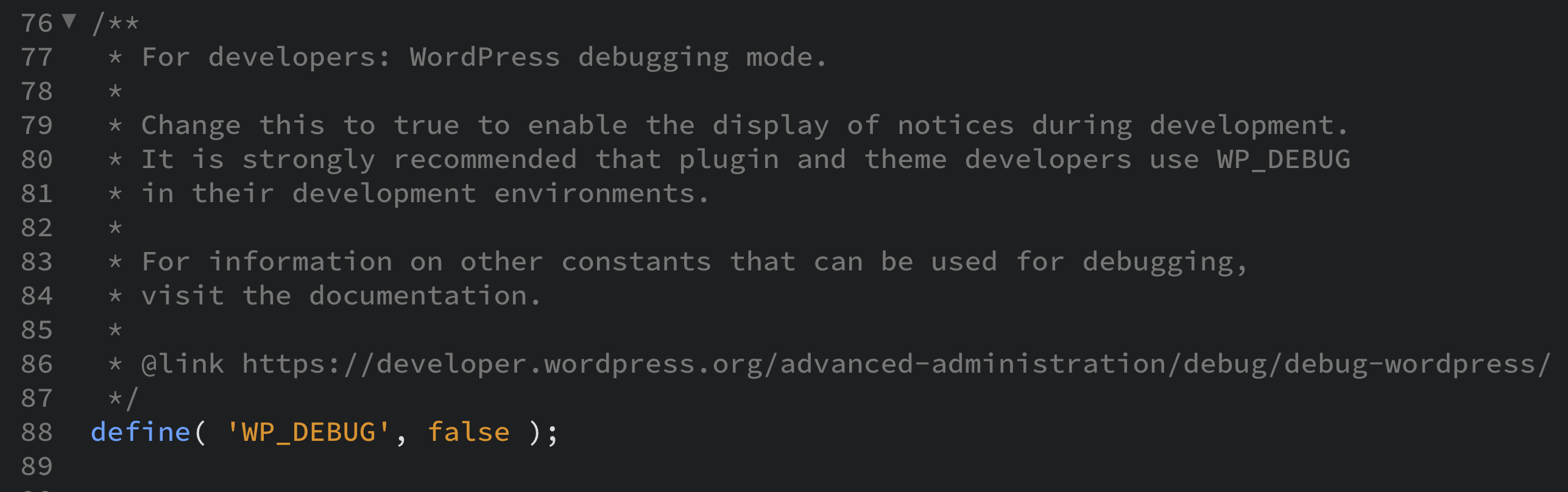
Note: If the value is already set to true, another extension, plugin, or server configuration may be suppressing the error output.
Refresh the page where you saw the error. You should now see a more descriptive error message that helps identify the cause. For more details on debugging, see the WordPress debugging guide.
Contact your hosting provider
↑ Back to topBecause an HTTP 500 error originates at the server level, additional details are often available in your server’s error logs. Contact your hosting provider and ask them to check the error logs for entries that correspond to the time you encountered the issue. Sharing the timestamp and the URL where the error appeared helps your host investigate more quickly.