
WooCommerce automatically creates several pages your store needs to function, including Shop, Cart, Checkout, and My Account. This guide explains what each page does, how to reinstall missing pages, and how to change which pages WooCommerce uses for core store functions.
Installation and configuration
↑ Back to topWhen you install WooCommerce and complete the Setup Wizard, the following pages are created automatically:
- Shop — No content required.
- Cart — Contains the WooCommerce Cart block and displays cart contents.
- Checkout — Contains the WooCommerce Checkout block and displays shipping and payment options.
- My Account — Contains the
[woocommerce_my_account]shortcode and displays customer account information, orders, and other details. - Refund and Returns Policy (unpublished draft) — Contains sample text to help you write your store’s Refund and Returns Policy. This page is not required but is strongly recommended.
Add a shortcode in the block editor
↑ Back to topTo add a shortcode to a page using the block editor, insert a Shortcode block, enter the shortcode, and save the page.
Reinstall pages or install missing pages
↑ Back to topIf you skipped the Setup Wizard or need to install missing WooCommerce pages, you can use the built-in page installer tool. Navigate to WooCommerce > Status > Tools and click the Create pages button. This creates any default WooCommerce pages that are missing from your site.

Page setup
↑ Back to topBy default, WooCommerce assigns the Cart, Checkout, My Account, Terms and Conditions, and Shop pages to the default pages created during onboarding. If you create new pages or want to change which pages WooCommerce uses for cart, checkout, or other functions, you need to update the Page setup settings.
To set pages for Cart, Checkout, My Account, and Terms and Conditions:
- Navigate to WooCommerce > Settings > Advanced.
- Select the page you want to use in each relevant dropdown.
- Click Save changes.
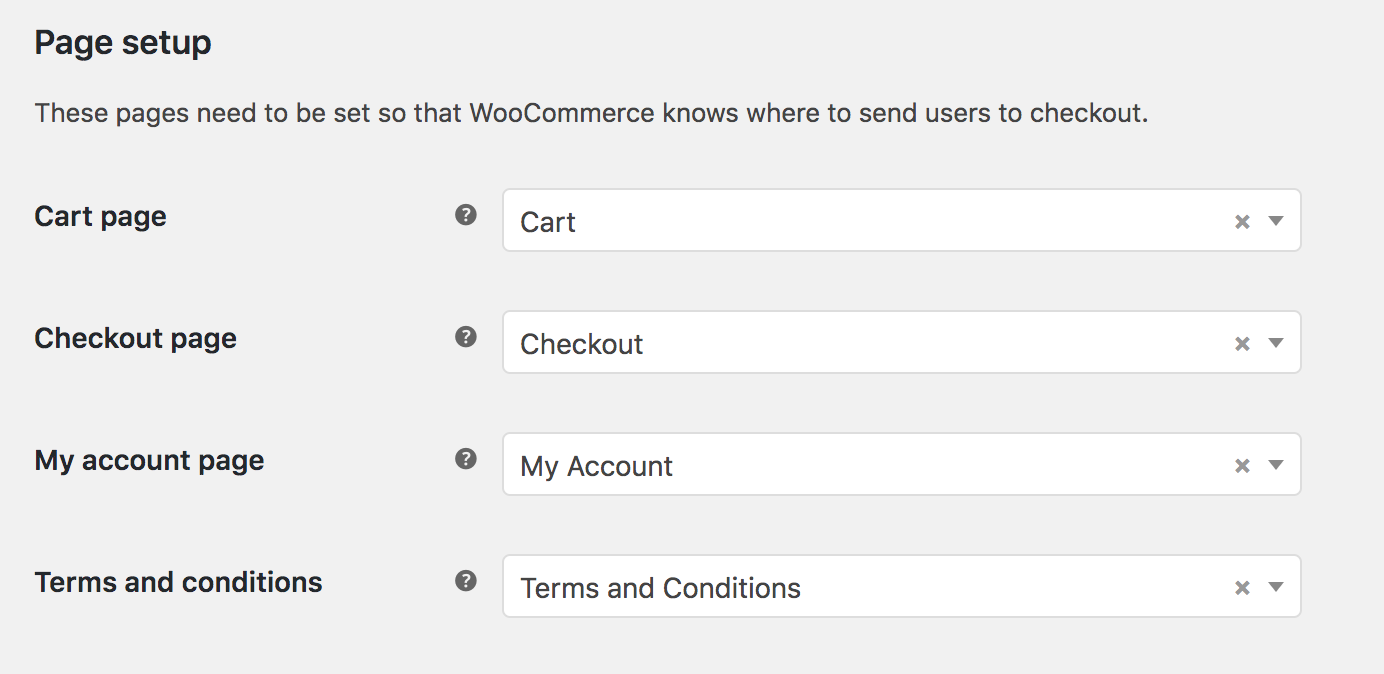
Separate pages required for Cart, Checkout, and My Account
↑ Back to topSetting the Cart, Checkout, and My Account pages to the same page causes incorrect redirects and broken payment gateway functionality. WooCommerce 3.7 and later prevents this configuration.
Terms and Conditions page
↑ Back to topThe Terms and Conditions page is not required but is highly recommended. When you assign a Terms and Conditions page in your WooCommerce page setup settings, a link to your store’s terms appears at checkout. Customers are notified that by continuing with checkout, they agree to the terms.
Shop page
↑ Back to topThe Shop page is the main page where your store’s products are displayed. It also serves as the destination for the Continue Shopping link that appears under certain conditions when adding a product to the cart or viewing an empty cart. The Shop page uses a template that either transforms the assigned page or displays default content if no page is assigned. As a result, it may render differently than other pages on your site.
The /shop/ URL cannot be deleted. If the page assigned as the Shop page has a slug other than shop, it loads at that URL (for example, example.com/my-fancy-store/), and example.com/shop/ returns a 404 error. If no Shop page is set, example.com/shop/ still works and loads the default content, typically a list of products. You can use a redirection plugin or code snippet if that behavior is undesirable.
To assign a page as the Shop page:
- Navigate to WooCommerce > Settings > Products.
- Select the page you want to use in the Shop page dropdown.
- Click Save changes.
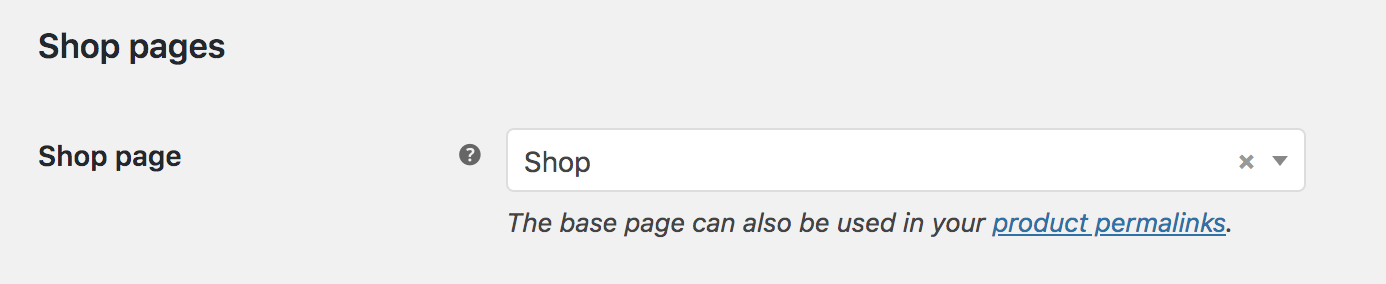
If your site uses a block theme, you can customize your product catalog templates in the site editor.
You can also display products on pages other than the Shop page using WooCommerce blocks and product shortcodes.
If you use an SEO plugin, it may include settings specific to custom post type archives. Use those settings to control the Shop page’s SEO behavior.
The Shop page is compatible with all WordPress themes as of WooCommerce 3.3. If you use a custom or child theme, a version of WooCommerce prior to 3.3, or experience a compatibility issue, refer to Third-party/custom theme compatibility.
Questions and support
↑ Back to topDo you still have questions and need assistance?
This documentation is about the free, core WooCommerce plugin, for which support is provided in our community forums on WordPress.org. By searching this forum, you’ll often find that your question has been asked and answered before.
If you haven’t created a WordPress.org account to use the forums, here’s how.
- If you’re looking to extend the core functionality shown here, we recommend reviewing available extensions in the WooCommerce Marketplace.
- Need ongoing advanced support or a customization built for WooCommerce? Hire a Woo Agency Partner.
- Are you a developer building your own WooCommerce integration or extension? Check our Developer Resources.
If you weren’t able to find the information you need, please use the feedback thumbs below to let us know.