An early fraud warning (EFW) is an alert from a card issuer that a payment you’ve taken is likely fraudulent. An EFW may arrive days before the cardholder files a dispute, which gives you a small time window within which to act.
To be clear, an EFW is not a dispute or an inquiry. No money leaves your account when an EFW arrives, you pay no fee, and you need not gather evidence. WooPayments just shows you the warning so that you can decide what to do with the order.
Currently, the Visa, Mastercard, and JCB networks are the only ones that issue EFWs.
Where EFWs appear
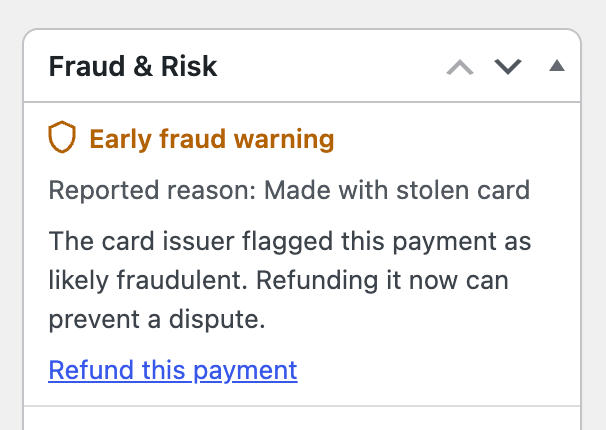
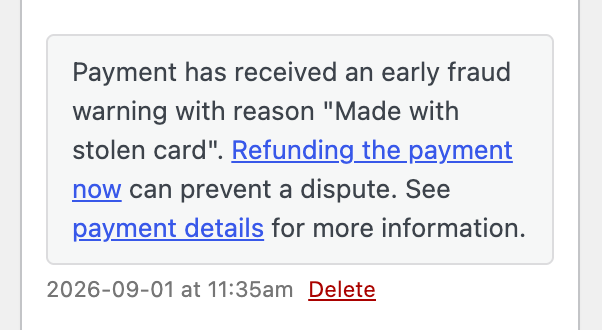
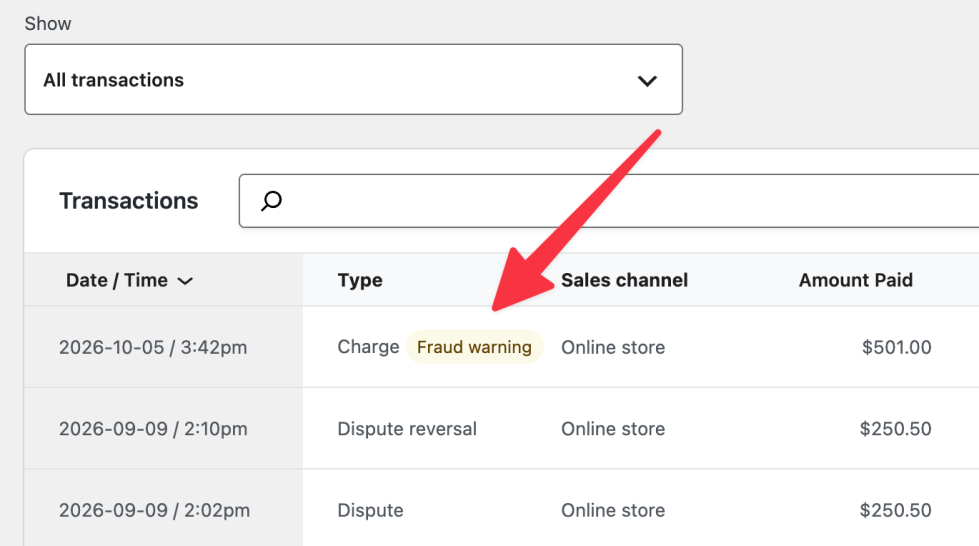
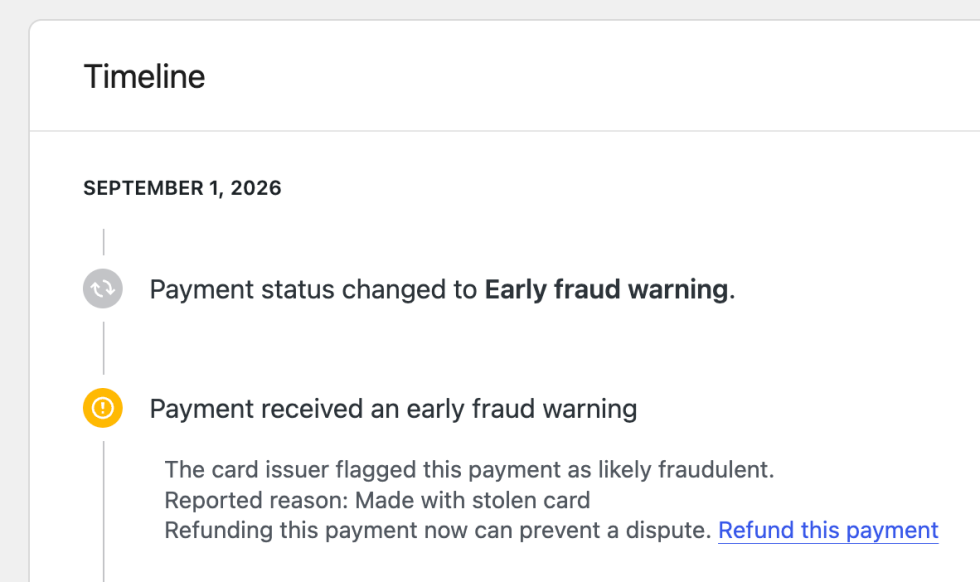
↑ Back to topWooPayments surfaces early fraud warnings to you in four places:
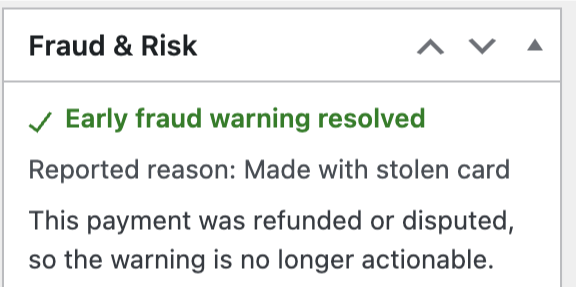
- The Fraud & Risk box on the order page itself
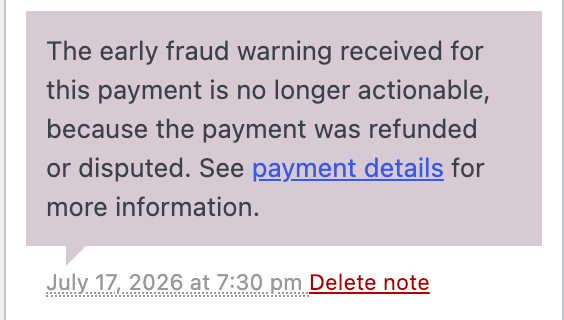
- The order notes, also on the order page of course
- The transaction list, under Payments > Transactions
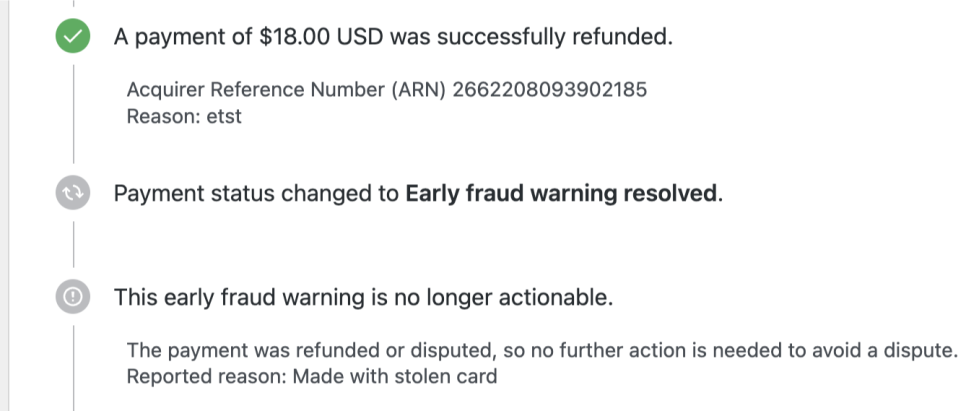
- The transaction details page
Reported reasons
↑ Back to topMost EFWs include a reason as to why they were filed. These can include:
- Card never received: The card was intercepted before it reached the cardholder.
- Fraudulent card application: Someone opened the card account using false details
- Made with counterfeit card: The card was cloned or forged.
- Made with lost card: The cardholder lost the card and someone else used it.
- Made with stolen card: The card was stolen and used by someone else
- Unauthorized use of card: The cardholder did not approve this payment.
Unlike disputes, the reason for an EFW shouldn’t change how you handle it. Think of it more like background information on what the card issuer thinks happened.
Deciding whether to refund
↑ Back to topRefunding a charge with an EFW prevents the cardholder from raising a dispute on the payment. You also avoid the dispute process and the dispute fee that comes with it.
NOTE: Refunding an EFW charge doesn’t mean there are no consequences for your business. This is because all EFWs are factored into the fraud monitoring programs run by card issuers. Only a reversal, which must happen within a few hours of the charge, can stop an EFW report from negatively impacting you.
Doing nothing is an option, but there is a risk: about 80% of early fraud warnings turn into disputes if the merchant does nothing.
However, refunding every EFW is not a good idea either, since ~20% of them won’t turn into disputes. Refunding all of them costs you legit sales revenue.
Whether or not to refund depends on the amount of the charge vs. your dispute fee:
- If the charge is less than your dispute fee, refunding is usually worthwhile. A dispute would cost you the payment and the fee, so caution is best.
- If the charge is well above your dispute fee (say 35% over or more), refunding likely will not be worth it. If it’s a legit sale, you lose a lot of money.
- If it’s in between those two, use your judgement. Weigh the reported EFW reason and what you know about the order and customer to help you decide.
All four places that EFWs are surfaced to you (shown above) have a link you can click in order to refund the payment quickly and easily.
Resolved warnings
↑ Back to topA warning stops being actionable once the payment is fully refunded or once a dispute arrives. In such cases, the places where you are alerted to early fraud warnings will be updated to indicate that the EFW is resolved.
If the early fraud warning is resolved because the charge was disputed, you should proceed to handle the dispute as you normally would.