
If data is not loading in the WooCommerce Mobile App — such as store stats, orders, products, or reviews — this guide walks you through the most common causes and how to resolve them. Work through each section below to identify and fix the issue.
Update the WooCommerce database
↑ Back to topA mismatched database version can prevent the app from loading data correctly. Verify that your WooCommerce database version matches the installed WooCommerce version by going to WooCommerce > Status in your WordPress dashboard. The WooCommerce Database Version value should match the WooCommerce Version value shown on the same page.
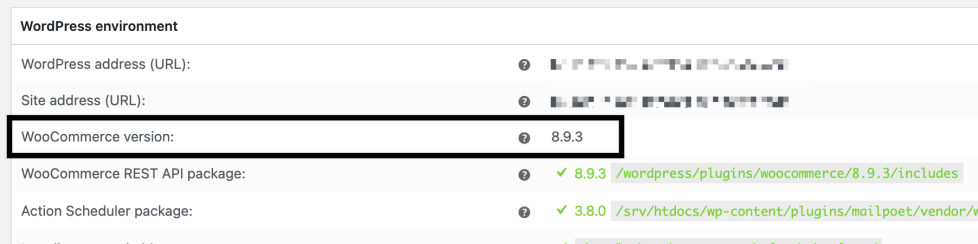

If the two versions differ, create a complete backup of your site first. Then go to WooCommerce > Status > Tools and click the Update Database button. After the update completes, open the mobile app and check whether data loads correctly.
Test for plugin conflicts
↑ Back to topIf the WooCommerce database is up to date, another plugin on your site may be interfering with the app. To identify the conflicting plugin, follow these steps:
- Deactivate all plugins except WooCommerce and Jetpack (if you use the Jetpack connection).
- Open the mobile app and test whether data loads.
- If the app works, reactivate plugins one at a time. Test the app after each activation to find the plugin that causes the issue. Start with caching or security plugins, as these are the most common sources of conflicts.

Consider whether the app stopped working after you recently installed a new plugin or ran a plugin update. That information can help narrow down the source of the problem.
If you identify a conflicting plugin, contact that plugin’s support team and let them know it causes conflicts with the WooCommerce Mobile App. Also inform the WooCommerce support team so they can address the conflict from their side.
For a detailed walkthrough of the conflict-testing process, see how to test for conflicts.
Note: A third-party plugin can alter the type of a field in the app’s API response, which causes the app to fail when parsing the value. WooCommerce cannot prevent other plugins from modifying these responses. If a plugin submits invalid data, contact the plugin developer for assistance.
Check for site performance issues
↑ Back to topThe app or Jetpack may have difficulty maintaining a consistent connection to your site if the server responds slowly or inconsistently. The following steps can help resolve performance-related loading problems.
Verify your PHP version
↑ Back to topMake sure your site runs a PHP version that meets WordPress requirements. Contact your hosting provider if you need help updating PHP.
Check for security blocks
↑ Back to topSecurity plugins or server-level firewalls can block the app’s requests. Ask your hosting provider to check its logs for blocked requests and identify the rule responsible. Direct requests from the app to your site’s REST API need to be checked separately from requests sent through Jetpack.
If the app uses a Jetpack connection, ask your host to check requests to your site’s XML-RPC endpoint. For a WordPress installation at the root of the domain, this is https://example.com/xmlrpc.php. Replace the example with your site’s actual URL.
- Source IP: Verify that requests come from the published Jetpack IP ranges.
- Query string: Jetpack requests include
for=jetpack. This helps locate requests in logs, but the query string alone does not prove their origin.
If genuine Jetpack requests are blocked, ask your host to allow those IP ranges access to the XML-RPC endpoint. Keep the exception scoped to that endpoint. The host should keep its rules current as the published IP list changes; Jetpack’s IP allowlist guide includes examples and machine-readable lists.
Do not allow requests based on the Jetpack by WordPress.com user agent. Anyone can send that text, so it does not prove that a request came from Jetpack.
After the change, confirm the connection with the Jetpack debug tool and test whether data loads in the app. A browser or terminal request from outside Jetpack’s IP ranges can still be refused by a correctly restricted endpoint.
Identify resource-heavy plugins
↑ Back to topIf the issue persists, install Query Monitor to identify which plugins or themes consume the most server resources. Remove or replace any plugins that are not essential but have a significant performance impact. Reducing server load improves overall site performance even if the connection issue has a different root cause.
Verify order creation dates
↑ Back to topIf your orders are not loading in the app, one or more orders may have an invalid creation date. Go to WooCommerce > Orders in your WordPress dashboard and verify that every order displays a valid date. Orders with missing or malformed dates can prevent the app from parsing the order list.
Still experiencing issues
↑ Back to topIf you use the Jetpack plugin to connect the app to your site, verify that the Jetpack connection is active and working correctly. Review Jetpack known issues or try reconnecting your site to Jetpack.
If the problem continues, contact the WooCommerce support team from within the app by going to Menu > Settings > Help & Support > Contact Support.