




If you’re a B2B merchant — or want to be one — a B2B ecommerce platform is an essential tool for your business. It simplifies processes for clients and your team, and helps you grow faster and more efficiently.
Let’s take a closer look at how an online storefront can help your B2B business grow and how to choose the right B2B ecommerce platform.
Why create a B2B ecommerce store
↑ Back to topWhen you think of an online store, you may initially think of a direct-to-consumer business selling consumables, gifts, and clothing. But an ecommerce website is also an incredibly powerful way to reach business customers.
Even if you have a long sales cycle, it provides you with a home base for your operations. Manage your marketing program, customer accounts, shipping, inventory, and leads all from one hub, then collect payments on the same platform when companies are ready to buy. You maintain full control, create a seamless customer experience, and streamline operations all at the same time.
Plus, you can provide client account management, relieving some of the burden on your sales reps and customer support teams.
For example, instead of calling to ask for a quote, a sourcing manager could submit a request online and find out this information immediately, no matter the time of day. They could also submit an order or sign up to have your products delivered automatically on a monthly basis.

Or if you provide, say, lawn care services for companies, a business owner could log into their account to adjust their frequency or see the next time you’re scheduled to stop by.
Ecommerce sites also allow you to sync information between various distribution channels and better understand customer behavior across every touchpoint, ensuring that everything’s up-to-date and accurate. Plus, they can take away the painful steps involved in manually sending invoices and quotes and chasing down late payments.
Finally, a B2B ecommerce website acts as the face of your company and the hub of all your marketing strategies, allowing you to link directly to products and services in your marketing campaigns, create helpful content, and more.
What are WordPress and WooCommerce?
↑ Back to topBefore we dive in, let’s get to know WordPress and WooCommerce.
WordPress is the world’s most popular content management system, powering millions of websites. It’s open source, flexible, and built to handle everything from blogs and marketing sites to large-scale enterprise platforms.
WooCommerce is a plugin that transforms a WordPress site into a fully-featured online store. It supports physical and digital products, subscriptions, memberships, and wholesale ecommerce, making it an ideal solution for B2B businesses. Because it’s open source, you maintain full control over your site, customer data, and integrations, and you can scale it to fit your business’s unique workflows and growth.
Considerations for choosing a B2B ecommerce platform
↑ Back to topThe B2B ecommerce platform you choose is the foundation of your online storefront. Let’s dive into some factors to consider and examine why WooCommerce tops the list for best B2B ecommerce platforms.
The products or services you sell
There are a huge variety of possibilities for B2B companies, including:
- Physical products: Equipment, printed training books, or cleaning supplies.
- Digital products: Online courses, downloadable ebooks, or software licenses.
- Services: Graphic design, accounting, cleaning, lawn care, or legal help.
- Wholesale items: Products at large volumes sold directly to retailers with special contract-based pricing.
- Memberships: Access to a collection of benefits and resources, such as a training video library or online forum.
- Subscriptions: Recurring products or services, like a yearly license, weekly cleaning service, or monthly box of coffee pods.
As you can see, these all vary widely from one another, but there can also be overlap. You might be both a wholesale and retail business. You could sell both physical and digital books. Or you may have a subscription that includes a weekly office cleaning and a box of physical supplies.
The point is, you may want to do business in a variety of ways on the same platform. So it’s important that the B2B ecommerce platform can support all of them.
WooCommerce provides selling functionality for all of the products and services listed above, plus many more! Sell one type of product or multiple side by side. Allow anyone to purchase or restrict capabilities to specific clients or wholesale customers.
No matter what you want to sell or how you sell it, WooCommerce makes it possible.
Design flexibility
Your brand is unique, just like your products and services. And, of course, your website should reflect the personality and characteristics of that brand.
Good B2B ecommerce platforms will allow you complete and total flexibility to design and build anything you can imagine, whether you and your team are managing your site or you’re working with an agency.
With WooCommerce, you can harness the power of the block editor to build all of your pages, posts, checkout processes, and more. You can drag and drop elements — like paragraphs, headings, images, videos, and columns — to create your own custom layout without having to work with code.
You can then toggle settings to customize colors, font styles, and other design characteristics to make the page your own.
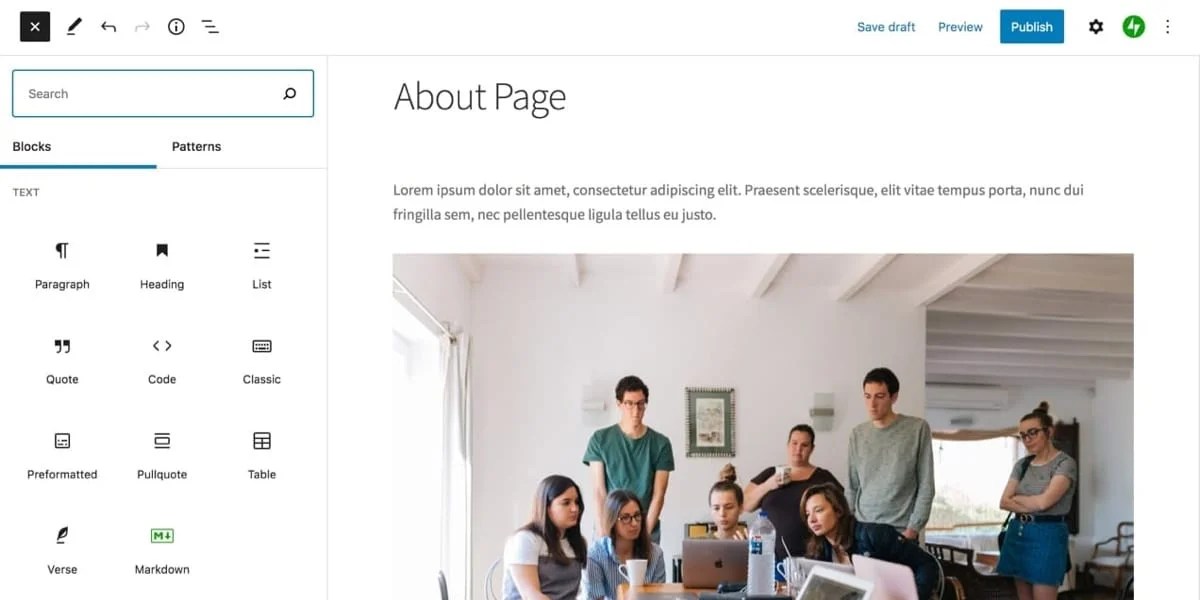
You can also use blocks to build and design global site elements, from headers and footers to product page and category templates. For example, you might add related products, videos, or specs to your product page design. Or you could add filters to the sidebar of your category pages. All of this is possible without interacting with code or hiring a developer.
There are also lots of free and premium themes that are great starting points for your site design. Some are like blank slates, providing just the basics so you can truly customize to your heart’s content. Others offer ready-to-go designs and layouts that you can quickly edit and get to selling right away.
Learn more about creating effective ecommerce website designs.
Content ownership
Owning your content should be non-negotiable. Your website is a marketing channel, revenue engine, data hub, and often the backbone of your operations. But many proprietary B2B ecommerce platforms like Shopify and Wix can take your site down with no warning if they decide that you’ve violated their terms and conditions in some way.
But with WordPress and WooCommerce, you control your hosting environment, data, codebase, integrations, and long-term roadmap. There is no company that can unilaterally shut down your store or dictate how your business model operates.
This also allows for customization without limits. Since it’s open source software, your team will have full access to the source code, which is unheard of with proprietary platforms. As you scale, your store can seamlessly adapt to handle complex pricing, bulk orders, custom workflows, third-party integrations, global expansion strategies, and unlimited orders and visits — all without escalating transaction fees or forced plan upgrades.
Payment gateway integrations
Payment gateways allow you to securely process transactions, authorize payments, and transfer funds directly into your business bank account. There are quite a few available, and the right choice depends heavily on your business model, customer base, and operational needs.
For example, your business may need to charge recurring payments, accept multiple currencies, integrate with express checkout tools like Apple Pay or Google Pay, or offer financing options like buy now, pay later.
Choosing a B2B ecommerce platform that integrates with your preferred or existing payment gateway will prevent conflicts, streamline processes, and prevent costly migrations down the road.
It’s also important to note that, while all gateways charge a fee to collect payments, some proprietary platforms charge additional fees on top of that.
WooCommerce, however, never charges additional fees for payment collection, and integrates with a wide array of solutions, including:
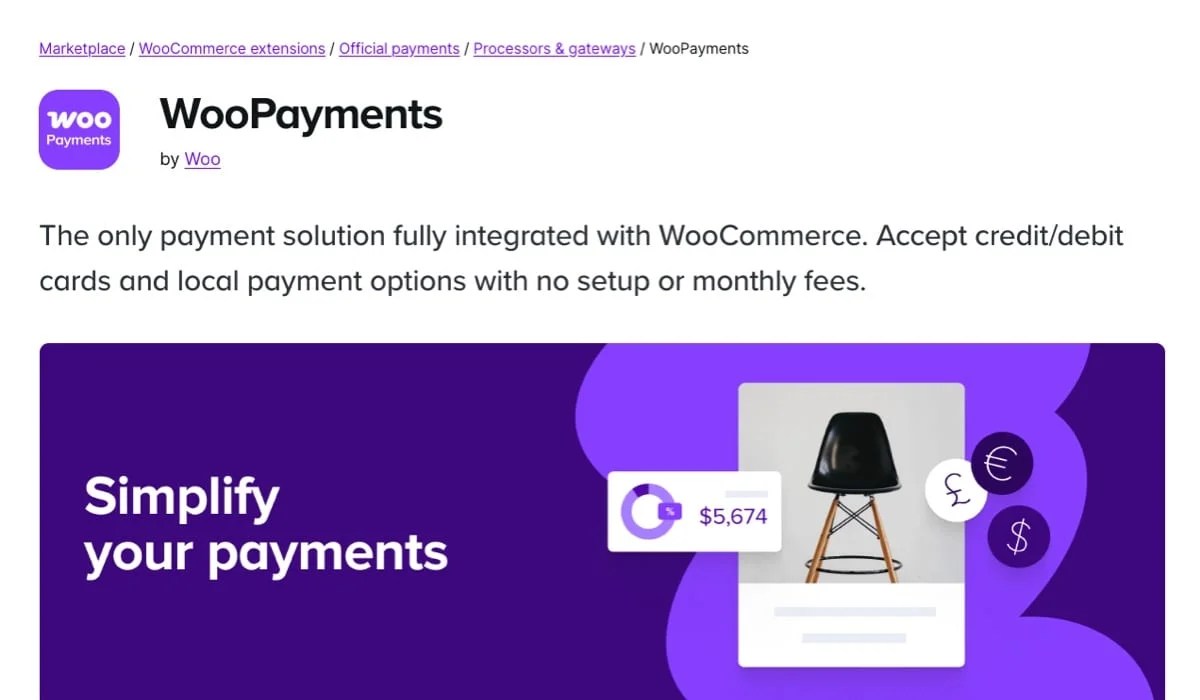
For an excellent all-in-one solution, WooPayments allows you to accept everything from credit and debit cards to digital wallets, buy now, pay later options, and in-person payments. Your team can manage payments and refunds directly from the WordPress dashboard. Plus, you’ll be able to accept multiple currencies, recurring payments, and more.
See a full list of gateways and learn more about choosing a payment gateway for your business.
B2B-specific functionality
Let’s talk a little bit about the types of business systems that many B2B stores need to operate.
Account management
The companies you work with should be able to make basic updates to their accounts without reaching out to customer support. For example, they might change their subscription frequency, request a refund, update payment information, edit their shipping address, or change their password via a self-service portal.
With WooCommerce, customers can access a centralized dashboard to manage their relationship with your business. By default, they can view order history, update billing and shipping details, manage saved payment methods, and reset their passwords.
Because WooCommerce is fully customizable, you’re not limited to a generic portal. Thanks to powerful extensions, you can tailor the My Account page to reflect your specific workflows, add or remove sections, highlight key resources, or provide role-based access for B2B customers with custom pricing or purchasing permissions.
Bulk ordering
If large orders are part of your business, your B2B ecommerce platform must be able to support them. This can involve:
- Offering functionality for wholesale or bulk pricing.
- Running smoothly and quickly at times of high traffic or surges in market demand.
- Accepting deposits or prior authorization.
- Providing self-service capabilities for business owners, while still supporting internal approval workflows when required.
- Avoiding extra fees for high sales volumes.
- Securely processing large transaction totals.
- Integrating with inventory management and shipping tools for accurate processes.
This will look different for each business, but your team should have a list of needs. Then, compare that list to the platforms you’re considering.
WooCommerce is set up for bulk orders, especially when you choose a quality hosting provider like Pressable that offers auto-scaling to support large volumes. There are no additional fees based on number of orders and a wealth of extensions that can handle all of the functionality listed above — and more.
Complex pricing, quotes, and invoices
Depending on the type of business you run, you may need to build complex pricing rules. Perhaps you charge one price for wholesale customers and another for retail. Maybe you offer discounts off of large orders or have tiered pricing meant to increase average order value. Or maybe you hide product prices until you can collect specific information from customers.
You may also need a system where retail partners can fill out a form based on their specific needs and request a quote. Your team can review their submission, send an invoice, and process their transaction. You can set up this kind of approval workflow all from your WooCommerce store, thanks to extensions like B2B for WooCommerce.
Shipping
Shipping logistics can be tedious, especially if you’re delivering large orders or specialty products. You may need to configure zone-based rates, dimensional weight calculations, bulk freight pricing, or custom rules based on order size, product type, or customer location.
The platform you choose should allow you to structure shipping fees in a way that meets your customers’ needs while functioning well for your operations team and bottom line.
Carrier integrations are equally important. You might rely on major providers, regional carriers, third-party logistics (3PL) partners, or freight services, and your ecommerce solution needs to integrate seamlessly with the business systems you already use. Plus, label generation, tracking updates, and real-time rate calculations can significantly reduce operational costs and help streamline operations at scale.
All of this is even more critical for businesses shipping high volumes, oversized goods, or specialized products that require refrigeration, hazardous material handling, or scheduled delivery windows.
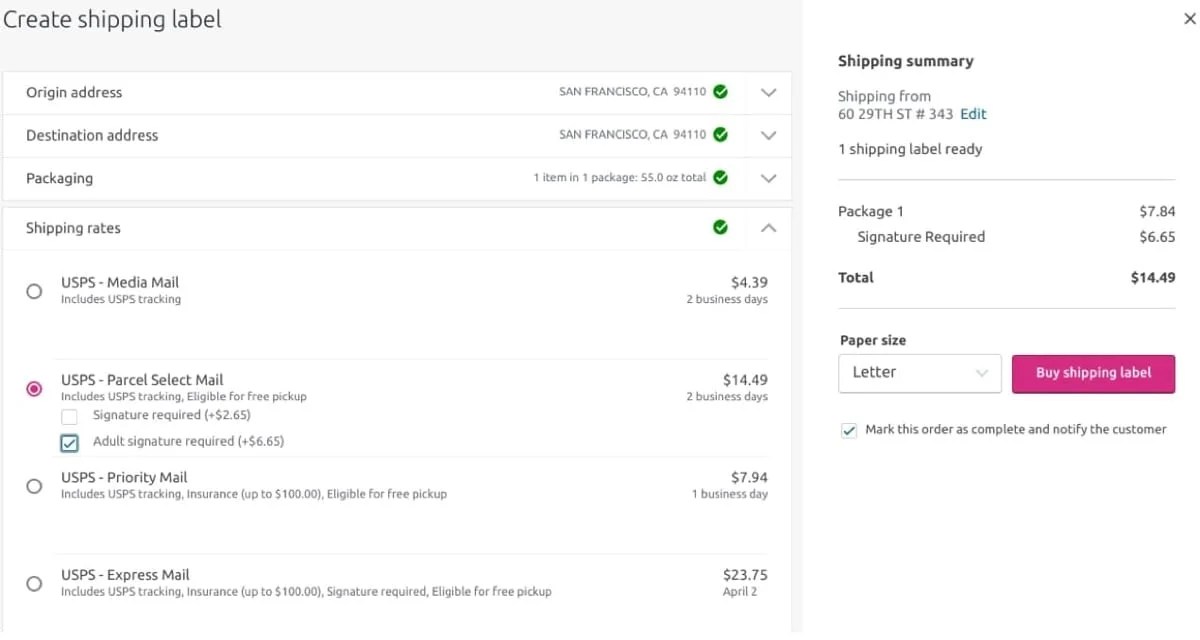
WooCommerce offers a lot of different options. Integrate with traditional carriers like USPS, FedEx, and UPS, or specialty providers like Purolator. Charge flat rate shipping fees, offer free shipping, or calculate based on a variety of factors like weight and cart total.
You can even set up complicated rules with the Table Rate Shipping extension. The best part? Your team can manage everything from the WordPress dashboard with WooCommerce Shipping or connect to third-party tools like ShipStation.
Read more in our ecommerce shipping guide.
Integration with other software
If you’ve been running your business for a while, you likely have a stack of tools you use on a regular basis. If you’re just getting started, you may have software in mind that meets your needs. Some of these may be marketing and customer service related — think email marketing platforms or CRM tools — but we’ll touch on these a bit later.
Or you might use enterprise resource management software (ERPs), inventory management tools, accounting software, collaboration tools, etc. Verify your platform works seamlessly with any and all of the tools your business needs.
WooCommerce offers high-quality extensions that make integrating third-party tools seamless and fast. And if one doesn’t already exist for the tool you need, your developer can take advantage of the REST API to create a connection.
Website speed
Slow load times drive clients away and negatively impact your search engine rankings. Look for a B2B ecommerce platform that is lightweight by default and provides the ability for you to optimize for speed.
For example, proprietary platforms like Shopify don’t provide access to the source code to make performance modifications, nor can you choose a hosting provider uniquely designed to meet your speed goals. Plus, many performance tools are paid add-ons, on top of already expensive premium plans.
With WooCommerce and WordPress, you can select any host you’d like and prioritize finding a provider that focuses on speed. And if your needs change as you grow, upgrade your plan or select a new provider.
For site-level performance optimization, there are excellent extensions available. Many of them, like Jetpack Boost, offer the majority of features for free, with premium plans available for more advanced functionality.
And, as always, your agency or developer can customize every aspect of your site code specifically for performance. This is typically not necessary, but is a great option to have for specialty scenarios or enterprise-level stores.
Security
Not only should you avoid putting client information at risk, you also want to protect your hard work and content. That’s why it’s so important to choose a secure platform with plenty of tools to keep your online business safe.
Choose ecommerce software that’s built on a foundation of security. WordPress and WooCommerce, for example, prioritize security and, with a few steps on your end, you can lock down your website and customer information.
Also look for a platform that makes it painless to integrate solutions like real-time backups, automatic malware scans, activity logs, web application firewalls (WAFs), and other tools. These work together to provide a comprehensive security solution for your entire B2B ecommerce store.
With WooCommerce, you have the flexibility and freedom to select a secure hosting provider, which should ideally offer essential features like SSL certificates, server-level backups, customer support, and more. Then, you can install the security tools that you prefer.
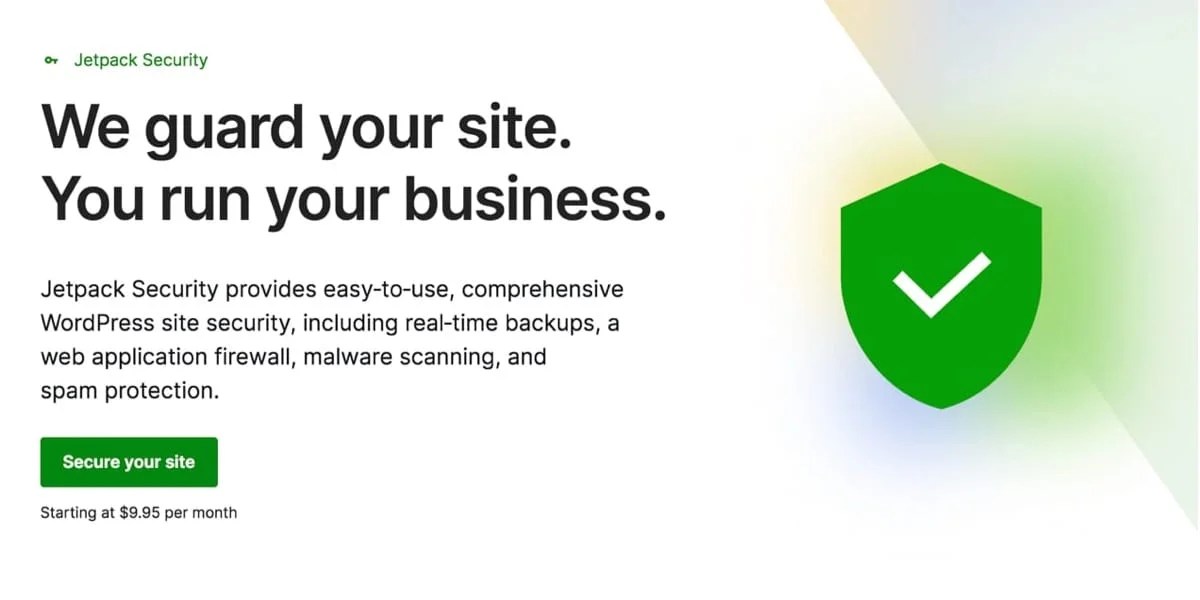
For example, with Jetpack Security, you can set up:
- Spam protection
- Real-time, off-site backups
- Automatic malware scanning and one-click fixes
- An activity log that shows all actions taken on your site
- Brute force attack protection
- A powerful website firewall
- Downtime monitoring
- Two-factor authentication
Customer service and marketing
Your B2B ecommerce platform should enact all your customer service and marketing strategies, from integrating seamlessly with the tools you already use to making it intuitive to add tracking codes.
Here are some marketing and customer service capabilities included with WooCommerce:
CRM integrations
Customer relationship management tools (CRMs) compile customer data, history, and activity in one central location so that your sales, marketing, and customer support teams can better do their jobs. Typically, each company or representative has a profile that includes all the details about their relationship with your business.
You can then use this information to deliver targeted marketing campaigns, equip sales reps with deeper account insights, answer any questions customers may have, and adapt your offerings to better meet their needs. This ultimately goes a long way towards driving repeat business and building customer loyalty.
WooCommerce integrates with many major CRMs, including Jetpack CRM (which operates directly in the WooCommerce dashboard), HubSpot, Salesforce, and more. See the full list of CRM extensions.
Integration with support forums and ticketing systems
Add live chat to your site, create a support forum, or integrate with tools like Freshdesk and Help Scout to improve your response times, increase customer satisfaction, and reduce the burden on your sales representatives.
Your ecommerce platform should connect seamlessly with the support systems your team already relies on, while compiling customer inquiries, order details, and account information in one place. This empowers support teams to resolve issues faster without switching between tools or manually tracking down information.
Content creation capabilities
Regularly create beautiful, effective blog posts, landing pages, and more to support the rest of your marketing efforts, respond to emerging market trends, and educate potential customers. The block editor allows you to do all of this without touching a line of code. Drag and drop elements like paragraphs, images, galleries, videos, and more into place, then customize their look and feel within a visual interface.
WordPress is centered around robust content tools that allow you to organize posts by categories and tags, manage authors, schedule content in advance, and optimize for SEO — all within a system built specifically for scalable publishing.
Integration with a wide array of marketing tools
Connect your store to the marketing tools that power growth across every channel. Monitor traffic and customer behavior with Google Analytics, integrate with social media platforms like Facebook and TikTok, launch and manage Google Ads, send targeted email campaigns, follow up on abandoned carts, and more — all from one connected ecosystem.
These integrations are essential to effective marketing automation, enabling you to trigger personalized messaging based on real customer actions. Whether someone downloads a resource, views a specific product category, or abandons their cart, you can automatically respond with relevant follow-ups that move them closer to purchase.
This also supports generating qualified leads by aligning your ecommerce data with CRM systems, email platforms, and advertising networks. You can segment audiences based on behavior, purchase history, and engagement patterns — improving conversion rates and reducing wasted ad spend.
Email marketing
Email is one of the most powerful marketing methods at your disposal. When done well, email can become a core revenue driver and source of customer acquisition.
Platforms like Klaviyo integrate directly with your store to unlock advanced automation, behavioral targeting, and data-driven personalization. You can automatically follow up with shoppers who browse specific products, trigger replenishment reminders, create post-purchase sequences, and build campaigns tailored to highly-specific customer segments.
For example, instead of sending the same message to your entire list, group customers based on purchase history, browsing behavior, geographic location, lifecycle stage, and even predicted future value. This level of targeting improves engagement rates and can increase average order values through personalized product recommendations, cross-sells, and upsells.
In addition to Klaviyo, MailPoet provides seamless email marketing directly within your dashboard, ideal for newsletters, automated welcome sequences, and ecommerce follow-ups. And with AutomateWoo, you can create rule-based workflows tied directly to store activity, such as rewarding loyal customers, re-engaging inactive buyers, or sending time-sensitive promotional offers.
Thanks to WooCommerce extensions, you can build a sophisticated email strategy that delivers relevant, personalized experiences and builds stronger customer relationships.
Scalability
Your B2B ecommerce platform should never hold you back. Watch out for ones that base fees off of sales, customers, or site visits. Your platform should also load quickly, whether you have 1,000 visitors or 100,000.
WooCommerce can scale with you to any size and supports even the most complex digital commerce operations. There’s no limit to the number of products or variations you can have.
WooCommerce is built to handle large volumes of orders and traffic spikes and is a completely free B2B ecommerce platform. Though you may want to use paid extensions, the pricing is never based on factors like sales or customers.
The best part? You can choose any hosting provider that you’d like. That means that, while you may have a shared hosting plan right now, you can always upgrade to a VPS or dedicated server as your traffic increases without impacting your online store.
Ease of use and management
You can’t afford to waste time on a platform that’s hard to use, difficult for new employees to learn, and requires a developer to make even the smallest of modifications.
While you can hire a developer to manage your site if you’d like, you certainly don’t have to in order to make the most of your WooCommerce store. As we mentioned earlier, the block editor enables you to rearrange, add, and delete elements by dragging and dropping.
Want to revise your products? You can do so by clicking buttons and editing fields — no code necessary!
Store managers can access everything from inventory management and ecommerce analytics tools to order information all in a single platform. And if you use tools like Jetpack CRM, WooCommerce Shipping, and WooPayments, you can handle label printing, payments, refunds, quotes, and more directly from your dashboard.
Plus, WooCommerce offers unrivaled customer support and thorough documentation to help you every step of the way.
If you do want to hire a professional to develop, maintain, or customize your store, check out our list of Woo Agency Partners. They’re vetted, high-quality agencies ready to help.
Examples of B2B ecommerce businesses
↑ Back to topWant a little bit of inspiration? Let’s look at a few examples of stores using WooCommerce to run a B2B operation.

1. Fuji Electric
Fuji Electric has been an innovator in industrial power electronics equipment for a century, serving manufacturing companies, automotive brands, and more.
Considering their wide scope, their website needs to appeal to a variety of audiences. They have an easy-to-use product finder tool that allows reps to select their industry and location to determine how to access specific items. They also incorporate features like breadcrumbs, search tools, and nested menus to guide business buyers to the right products.
Finally, they created detailed product pages that include all the information their corporate clients might need. These pages have photos, detailed descriptions, specs, manuals, performance graphs, and links to customer support.

2. Luna Glamping
Luna Glamping designs and manufactures luxury domes and tents for the hospitality industry, serving high-end resort operators and glamping site developers. Because most of their products are custom-made and carry a high price tag — with average order values around $20,000 USD — they needed a platform that could support a flexible, scalable B2B sales funnel and complex buying experience.
On their WooCommerce store, they implemented a tailored checkout flow and product configurator that accommodates 18 different upgrades and add-ons for each dome model — essential for selling configurable items.
By integrating tools like Google for WooCommerce, Luna Glamping drives high-intent traffic into their sales funnel and generates qualified B2B leads. This combination of customizable digital commerce infrastructure and scalable marketing integrations helps them maintain a premium buying experience while supporting business growth.
3. ISC Sales
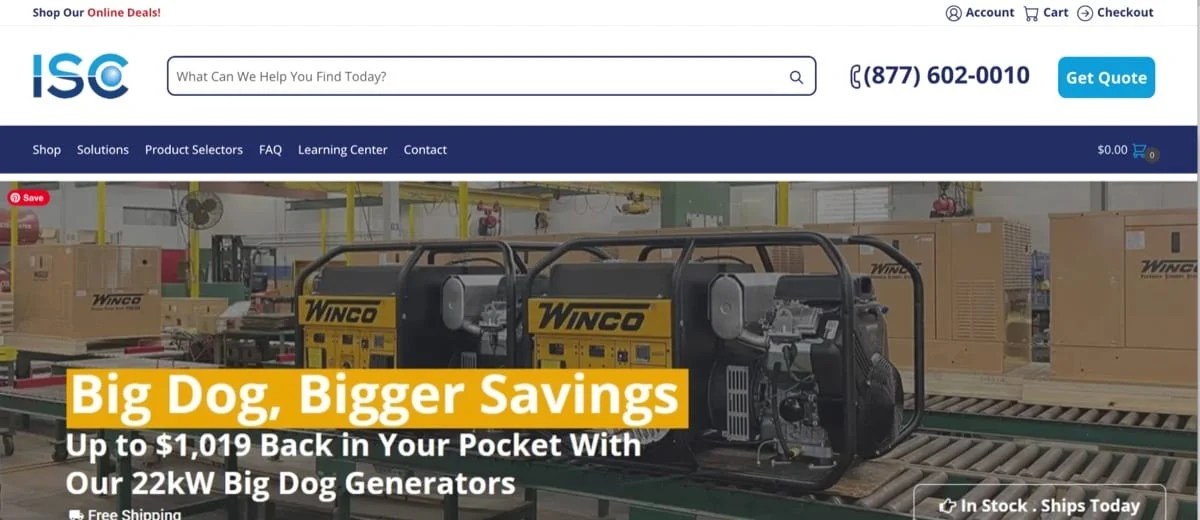
ISC Sales is an industrial equipment supply company with more than 17,000 products listed on their B2B ecommerce store. To make sorting through all of those items easier, they have a variety of product selectors that narrow down the product category based on customers’ needs.
They also leverage robust filtering tools, clearly-structured categories and sub-categories, intuitive search functionality, and detailed product pages to help business buyers quickly identify the right solution for their needs. For select products, instead of displaying fixed pricing, they offer a “Request a Quote” option — allowing for proposals, custom pricing, and more complex B2B purchasing workflows.

4. Gorilla Printing
Gorilla Printing is a large-format printing company based out of New York. They ship nationwide and sell everything from banners and signage to flags and vehicle wraps.
Their customization process enables businesses to select details like size and material, and even upload their files directly on their ecommerce site. If a company isn’t quite sure what they’re looking for, they can fill out a fast quote form to get some help.
5. The Interactive Advertising Bureau
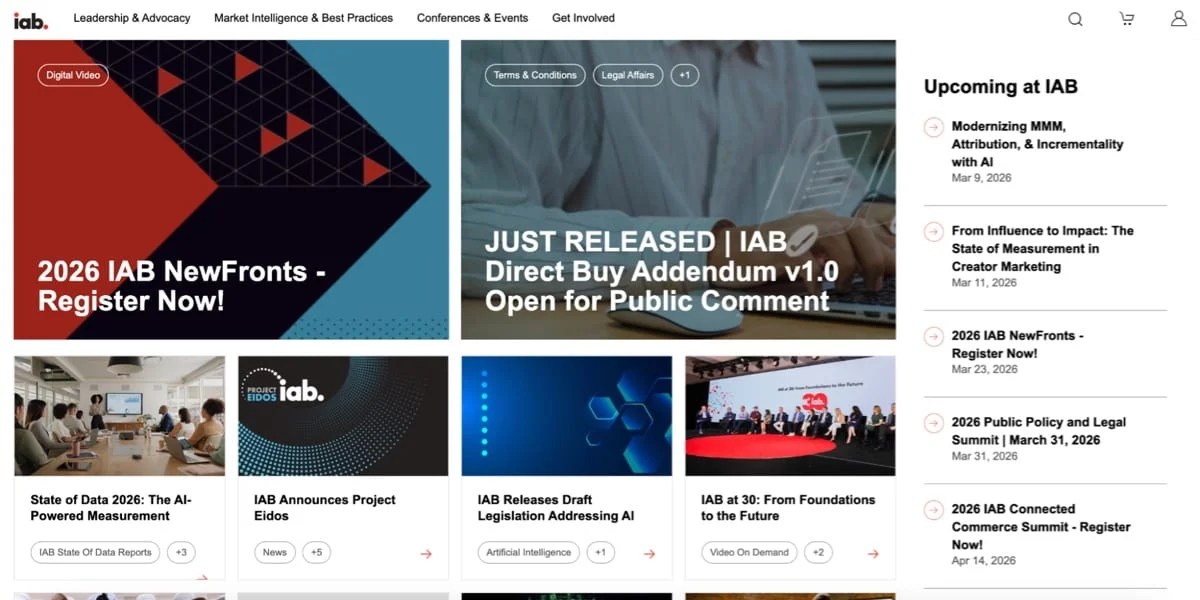
The Interactive Advertising Bureau (IAB) offers a comprehensive membership program designed for media owners, brands, agencies, and technology companies operating in the digital advertising space. Members gain access to industry research, benchmarking reports, certification programs, professional development courses, and exclusive thought leadership resources that help them stay competitive.
In addition to educational content, membership includes invitations to high-profile industry events, networking opportunities, and committees that shape advertising standards and best practices. By structuring their membership offerings online, IAB makes it easy for organizations to apply, manage their membership status, and access gated resources, streamlining what could otherwise be a complex B2B enrollment and renewal process.
6. Designmodo
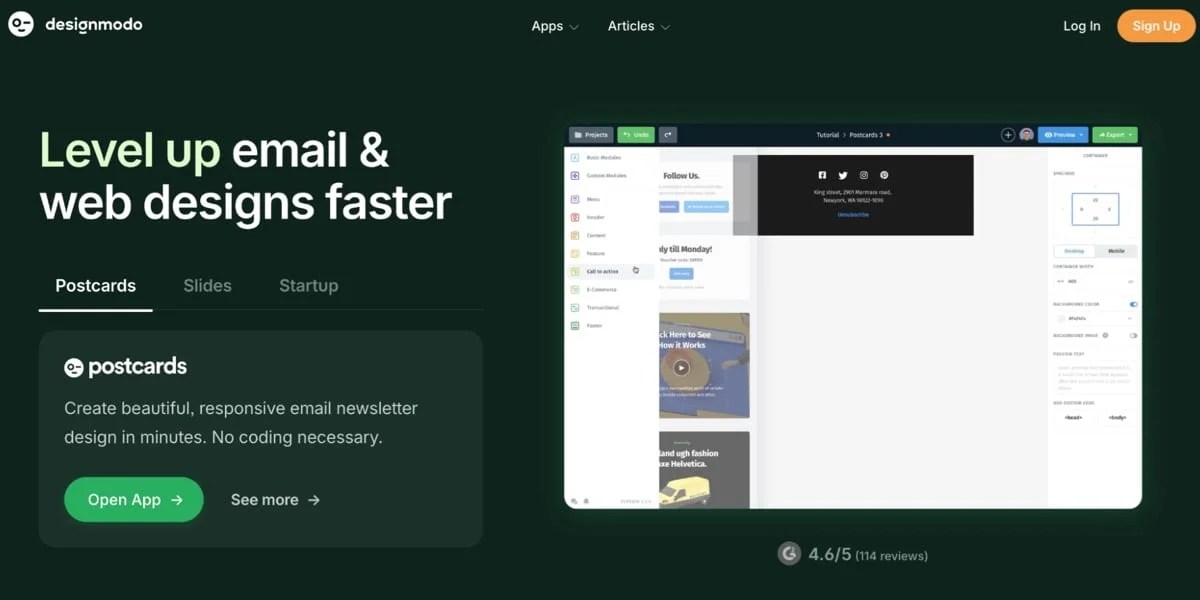
Designmodo sells digital subscriptions to design tools and resources used by developers, marketers, and product teams. Their offerings include website builders, UI kits, email frameworks, and other digital assets that professionals rely on to streamline workflows.
Customers can sign up for recurring access, manage their plans, and receive ongoing updates and new releases as part of their membership.
Frequently asked questions
↑ Back to topStill have questions? Let’s address some of the most common ones.
What is a B2B ecommerce platform?
A business-to-business ecommerce platform is software that provides all the tools you need to sell online. It goes beyond your basic online store, allowing access to specialized functionality like wholesale pricing, invoicing, quotes, bulk discounts, and more.
Ultimately, high-quality software will support the B2B business model, making things as frictionless as possible for the company using it and their clients.
Is it possible to run a B2B/B2C hybrid ecommerce store?
Yes, absolutely. This is a common business model. With a tool like WooCommerce, you can sell the same products to both B2B and B2C customers on the same storefront.
For example, the B2B for WooCommerce extension enables you to:
- Hide products and items based on user role: For example, you could have some items available for B2C customers, with others visible just to the businesses you work with.
- Configure customer specific pricing for different user roles: You might have one set of prices for standard shoppers and another, lower price for wholesale buyers.
- Allow B2B customers to request a quote: You can even customize the quote form fields just for your business needs.
These are just a few examples. You can customize your WooCommerce store to fit whatever your needs are. The key here, though, is to personalize the experience for both B2C and B2B customers, so both feel like their needs are being met.
How do I choose between B2B ecommerce platforms for my business?
The right ecommerce platform for your business to business company will depend on the specific needs you have. We’ve provided a pretty comprehensive list of considerations, from pricing and functionality to security and marketing capabilities. Sit down with your team, make a list of what you want to accomplish with your store, and make sure that the platform you choose checks all the boxes.
WooCommerce and WordPress are flexible and powerful enough to meet the needs of nearly any business to business operation. Not only does it offer extensions to meet the needs of B2B organizations, it also offers excellent support, security solutions, content creation tools, and more.
Is WooCommerce an enterprise-grade ecommerce platform?
WooCommerce is an excellent choice for enterprise businesses. It provides all the functionality needed to scale and is built for large order volumes. Enterprise stores will benefit from limitless flexibility, full content ownership, and free core software regardless of sales volume. Learn more about how WooCommerce scales.
You may also want to consider WordPress VIP, an advanced solution built specifically for enterprise organizations. In addition to the excellent features that are already included with WordPress and WooCommerce, you benefit from comprehensive security, top-level hosting, customer data analytics, and content tools designed around the needs of enterprises.
What are the different types of B2B businesses?
Since B2B stands for “business to business,” this can cover a wide array of organizations. Here are a few of the most common types:
- Product-based: Sell physical items to other companies. They might be wholesalers, distributors, or manufacturers.
- Service-based: Sell services to other companies. Think accounting, consultating, or insurance providers.
- Software-based: Sell software that helps businesses in some capacity. This includes invoicing tools, security services, and more.
A store on a B2B ecommerce platform might provide any or all of these offerings to their customers, and the structure of their operation may look different.
Build and grow your B2B ecommerce store with WooCommerce
↑ Back to topWhether you’re an established B2B company or just starting out, WooCommerce is the ideal open source ecommerce solution — offering all the tools and flexibility you need to grow. You can create and customize without writing or editing any code at all, or work with a developer to design an intricate selling platform.
It harnesses the power of WordPress to provide unrivaled content capabilities, and includes lots of extensions that help you customize the online customer experience. Plus, it can improve your marketing strategies and even make your team more efficient.
Looking for more information? These guides can help:
- How to Start an Online Business
- Tips for Choosing a Wholesale Provider
- A Guide to Selling Wholesale with WooCommerce
- Designing a Successful Client Onboarding Process


About



Thanks so much for putting up that blog. It has a lot of information that will help me open my own store. I really appreciate your efforts. May God bless you.
Thanks so much, Emma! Glad you found it helpful!