User Roles Editor for WooCommerce allows you to add, edit, or delete user roles. Assign and manage role permissions and automatically switch user roles depending on different conditions.
Installation
↑ Back to top- Download the User Roles Editor for WooCommerce.zip file from your WooCommerce account.
- Go to WordPress Admin > Plugins > Add New and Upload Plugin > Choose File (for the file that was downloaded).
- Install Now and Activate the extension.
Configuration
↑ Back to topYou can configure the user role editor plugin from the WooCommerce menu. Go to WooCommerce > FME User Roles, and here you can add new roles and manage existing user roles.
Add New User Roles to WooCommerce
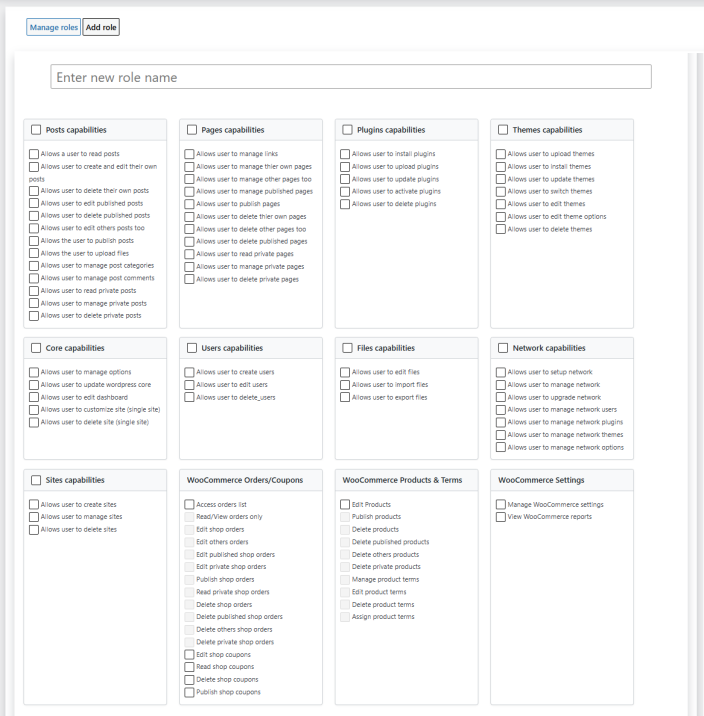
↑ Back to topWith the WooCommerce User Role Editor plugin, you can easily add new user roles to your WooCommerce store. Click “Add Role” to open a panel of capabilities you can enable for a specific user role. In this section, you can also manage all the user roles – default and custom. You can configure the following capabilities:
- Posts capabilities
- Pages capabilities
- Plugins capabilities
- Themes capabilities
- Core capabilities
- Users capabilities
- Files capabilities
- Network capabilities
- Sites capabilities
- WooCommerce Orders/Coupons
- WooCommerce Products & Terms
- WooCommerce Settings
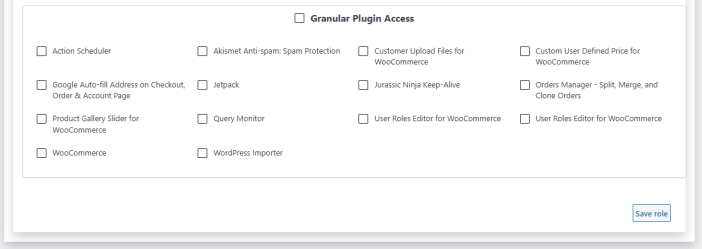
The plugin also allows you to manage granular access for all plugins. You can select the specific plugins for which you want to grant access for a specific user role.
Create Rule to Change Roles
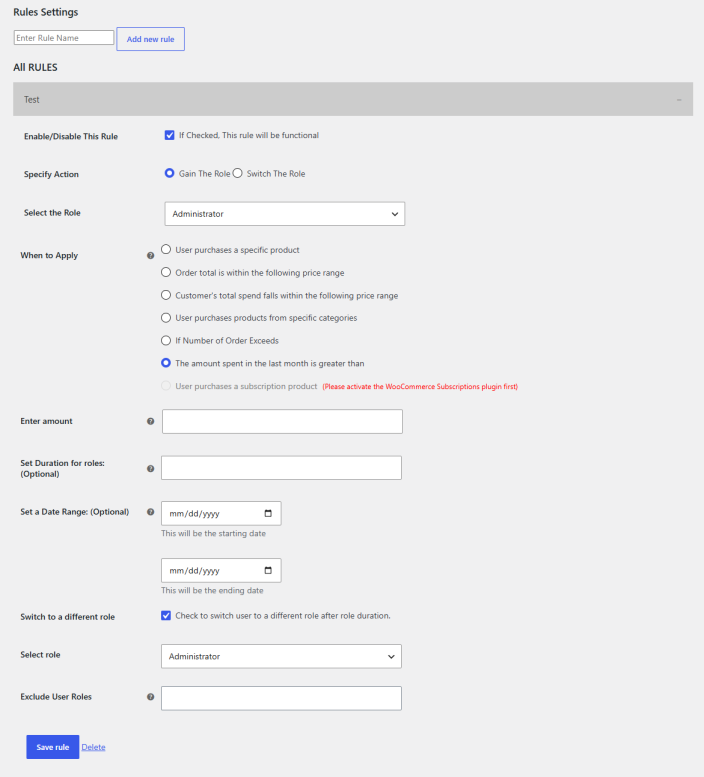
↑ Back to topCreate rules to automatically change user roels based on conditions. Go to WooCommerce Settings > Roles Changer > Rules and configure the following settings:
- Rule Name: Add a name for the rule.
- Enable/Disable this Rule: Enable or disable the specific rule.
- Specify Action: Select the action that you want to implement by the rule. You have two options:
- Gain the Role
- Switch the Role
- Select the Role (when action is “Gain the Role”): Choose the specific user role from the dropdown that you want the user to gain after meeting the condition.
- From This Role (when action is “Switch the Role”): Choose the user role from which the user will switch.
- To This Role (when action is “Switch the Role”): Select the user role to which the user will switch upon meeting the condition.
- When to Apply: Choose the condition after which the role change will occur. You can choose between the following options:
- User purchases a specific product
- Select a Product: Select the specific product (s).
- Order total is within the following price range
- Select a price range (Fill at least one): Set a price range for the role switch. You can set both starting and ending prices.
- Customer’s total spend falls within the following price range
- Select a price range (Fill at least one): Set a price range for the customer’s total spend to automatically switch user role. You can set both starting and ending prices.
- User purchases products from specific categories
- Select Category/Categories: Select the specific category required to change the user role.
- If the number of orders exceeds
- Number of Orders Exceeds: Enter the number of orders after which the user role will switch automatically.
- The amount spent in the last month is greater than
- Enter Amount: Enter the minimum amount the user has to spend to change the user role.
- User purchases a subscription product
- User purchases a specific product
- Set Duration for Roles (Optional): Set a duration for the rule. Enter the number of days for which the rule will stay active.
- Set a Date Range (Optional): Add a date range for the rule. You can set the starting and ending dates for the rule.
- Switch to a Different Role: Enable the checkbox if you want to switch to a different user role than the initial one once the duration ends.
- Select Role: Select the user role to which you want to switch the user after the duration.
- Exclude User Roles: Select the user roles to which this rule would not apply.
Email Settings
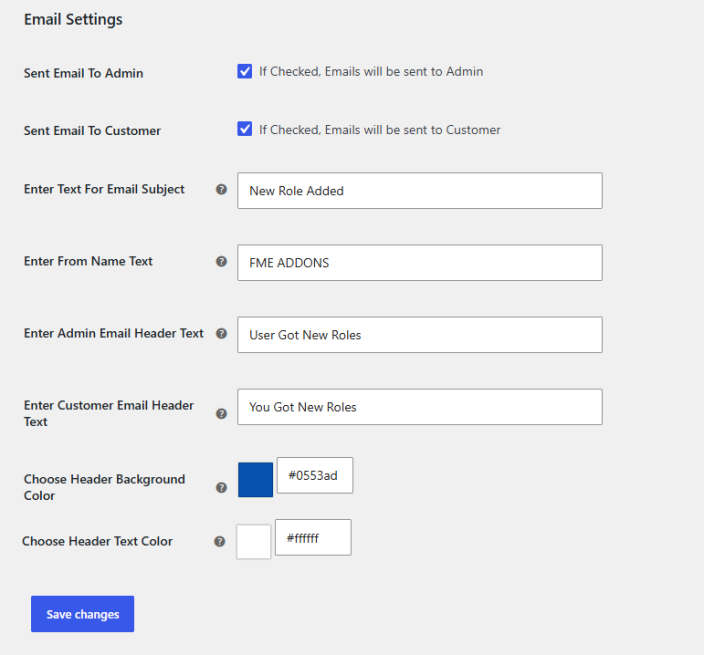
↑ Back to topSend email notifications to both the customer and the admin regarding role changes. To configure, go to WooCommerce Settings > Roles Changer > Email Settings.
- Send Email to Admin: Enable the checkbox to send email notifications to the admin.
- Send Email to Customer: Click the checkbox to send email notifications to the customer.
- Enter Text for Email Subject: Add a subject for the email.
- Enter From Name Text: Add the “From” name for the email.
- Enter Admin Email Header Text: Add the custom header text for the email that will be sent to the admin.
- Enter Customer Email Header Text: Add the custom header text for the email that will be sent to the customer.
- Choose Header Background Color: Choose the background color for the header.
- Choose Header Text Color: Select the color for the header text.
Additional Settings
↑ Back to topThe Additional Settings section allows you to enable menu visibility controls for different users and user roles. These settings let you control which users can see specific menu items on your website.
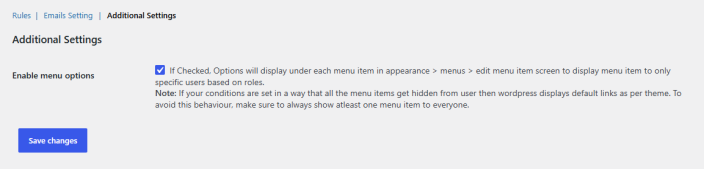
Enable Menu Options
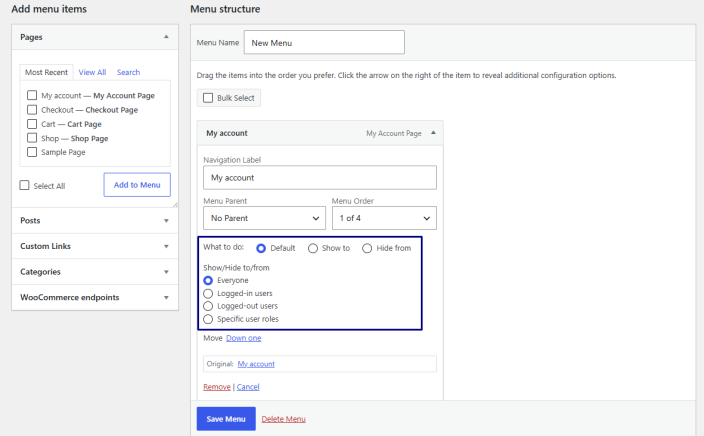
↑ Back to topEnable this option to add visibility controls to individual menu items. After enabling it, go to Appearance > Menus, expand a menu item, and configure its visibility based on user login status or user roles.
Choose how the selected menu item should be displayed:
- Default: Displays the menu item according to the default WordPress behavior.
- Show to: Displays the menu item only to the selected users or user roles.
- Hide from: Hides the menu item from the selected users or user roles.
Select who the visibility rule should apply to:
- Everyone: Applies the rule to all website visitors.
- Logged-in users: Applies the rule only to users who are logged in.
- Logged-out users: Applies the rule only to visitors who are not logged in.
- Specific user roles: Applies the rule to selected user roles, such as Administrator, Shop Manager, Customer, or other available roles.
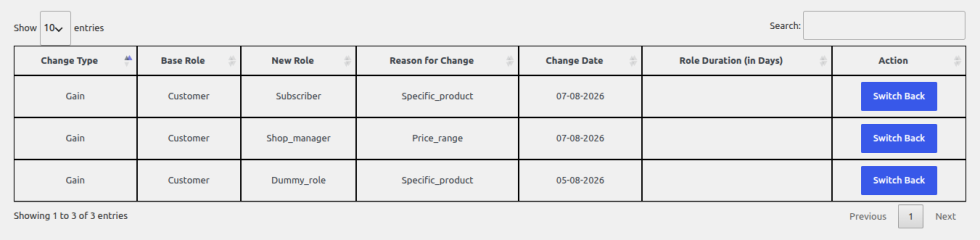
Admin can View User Role History
↑ Back to topEasily keep track of all role changes. Go to Users > All Users and check the history for any user. You can switch back to any role from this panel as well.
FAQs
- Do the WooCommerce roles permission plugin changes user role automatically?
The plugin automatically switches user roles based on your settings. You can assign roles such as admin, editor, author, and customer.
- Can I create more than one rule for multiple users?
Yes, with the WooCommerce shop manager role plugin you can create multiple rules for managing user role switches and gains for different user groups. The users get a role soon after they purchase a specific product or order products of a particular amount.
- How to automate the whole role-switching process?
You need to set criteria for automating user role switching and gaining. WooCommerce user role shop manager allows four different conditions to determine user roles.
- Specific product purchase
- Purchase from a specific category
- Ordering in a price range
- Customer’s total purchase